Zati for personal-injury law firms
Give the records request a team that returns something.
A request log sits in a spreadsheet. A document pack arrives in pieces. A treatment date contradicts the note a client gave in intake. Each of these needs different attention, and in most personal-injury firms one person absorbs all three. Zati is a workspace for organizing AI workers into a team you direct, so managing partners and operations directors can structure matter preparation around named assignments, inspectable outputs and attorney review.
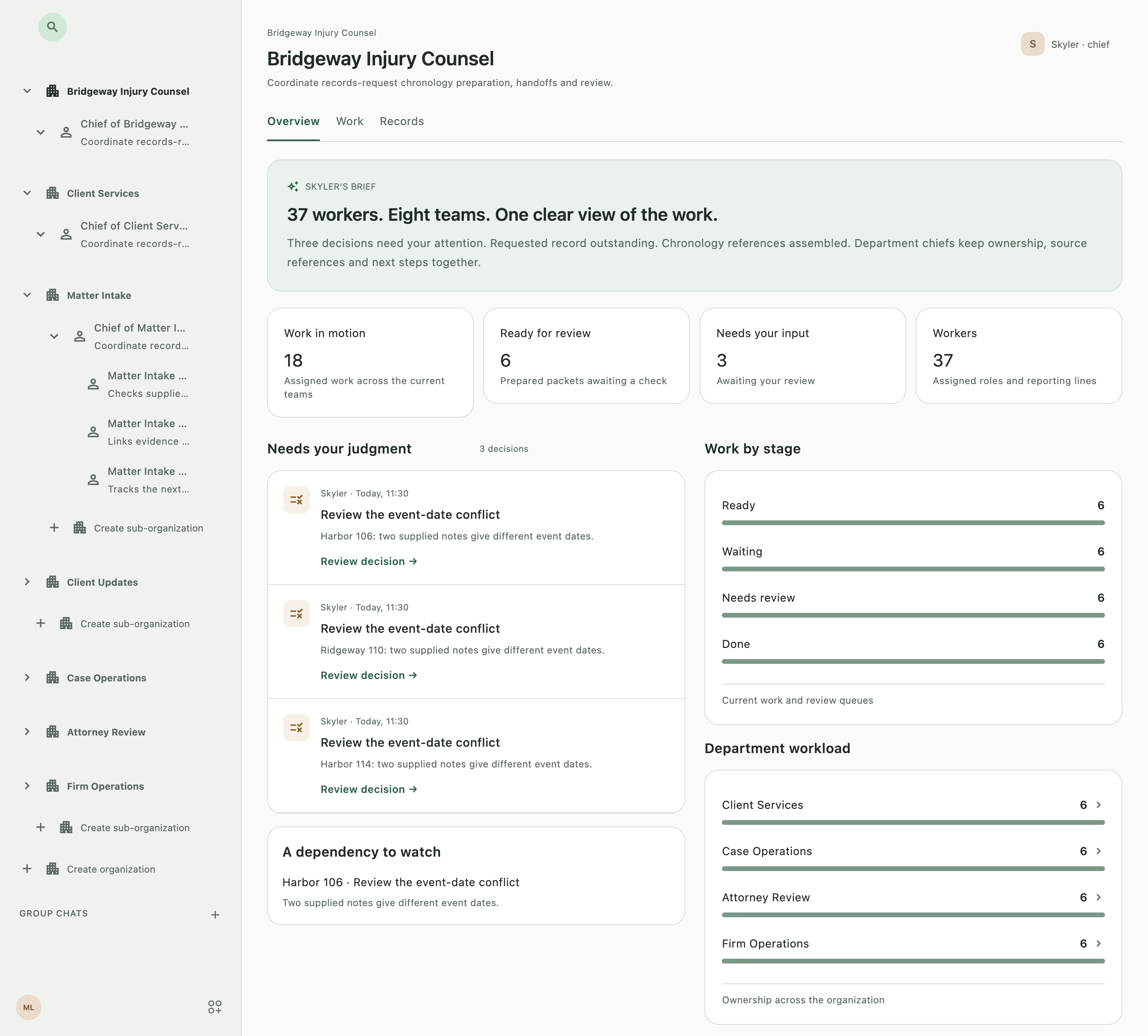
Begin with the request that keeps waiting
A records-request chronology is a good first responsibility because the output is recognizable: dates tied to supplied documents, a list of documents still outstanding, and the points where two sources disagree.
Configure the worker with the approved request log and the document pack your firm has released for use. Ask for a chronology where every entry names its source, every missing item names what was expected, and every conflict shows both versions rather than a resolution. The reviewer should be able to walk the chronology back to the material it came from.
That is a result your team can use on Monday. The organization grows from there.
Define what each worker should hand back
Structure the responsibility as separate assignments with owners, inputs and acceptance criteria.
- Records preparation: from the supplied request log and document pack, produce a cited chronology and a missing-document list, with each entry tied to a source.
- Packet readiness: compare selected matter documents against the firm's preparation checklist and return an indexed draft packet plus the prerequisites still unresolved.
- Review coordination: from staff-approved status notes and reviewer assignments, prepare a handoff brief naming the question, the supporting sources and the attorney responsible for answering it.
Each assignment keeps its own conversation and its own history, so a records question and a review question stay distinct. Acceptance is written around the quality of the next handoff: accurate references, explicit gaps, and a question the assigned person can actually answer.
Keep legal judgment with the attorney
Your case-management and document systems remain authoritative. The firm decides what may be supplied, who may use it and which model destinations are permitted; any further connected access depends on supported capabilities and explicit authorization.
Attorneys assess legal significance, privilege and matter strategy. Configure human approval before any external request, client communication or submission. For recurring preparation, set a cadence, a spending allowance and stop conditions, and route a missing source or unresolved conflict back for review rather than letting it resolve itself. Draft readiness and the decision to proceed remain separate steps.
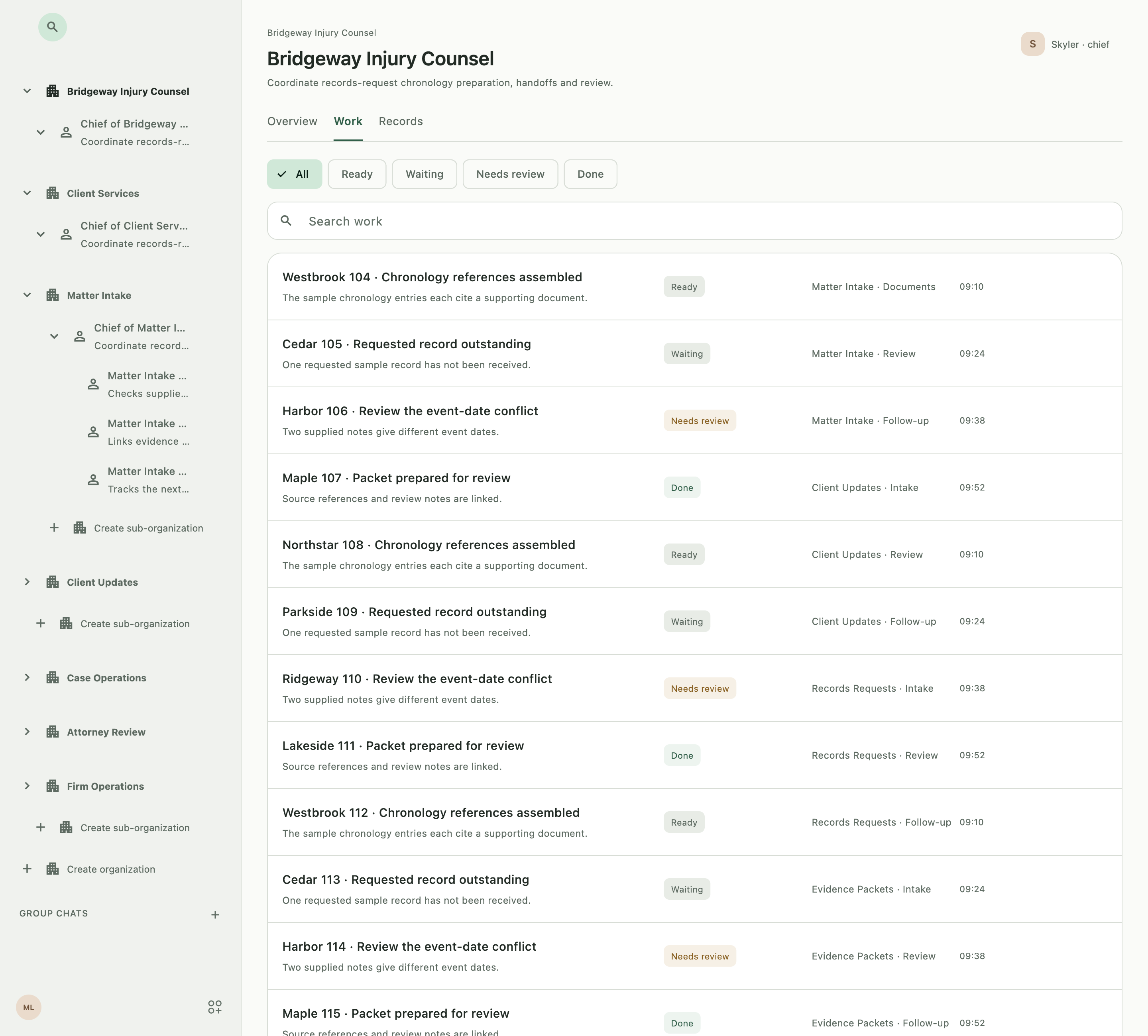
Arrange the team around the work
Give workers names, instructions, skills and reporting relationships that fit your firm. A chief can hold a coordination role while specialists hold focused assignments, and you decide how much structure is useful. A records team may be the right beginning; intake, demands or discovery support can follow once the first workflow proves out.
Questions before you start
Do we need a large AI organization?
Start with the smallest team that makes one responsibility clear. Add roles when the work gives you a reason.
How does Zati fit with the software we already use?
Bring your current tools and workflow to the conversation. Together we can assess the connections, access and outputs your setup would require.
What should I bring to the call?
One recurring responsibility, an example of its inputs and the result you would accept. We can discuss worker roles, review steps and requirements around that work.
Choose the first handoff to improve
Use a free 30-minute discovery conversation with David to map records follow-up, packet readiness or review routing, and agree on the output your firm would accept.